Writing
Essays and field notes on design systems, engineering workflows, and AI coding agents.
Latest
(2)
Core essays
(3)AI agents are creating a new kind of working time. You have already given the task, the work is in progress, but you are no longer doing anything with your hands. As Claude Code, Codex, and other agents become more autonomous, more of our work will consist not of constantly interacting with an interface, but of assigning tasks, switching between processes, and reviewing results. It feels like a small culture is starting to form around that space. I call it Après-prompt.
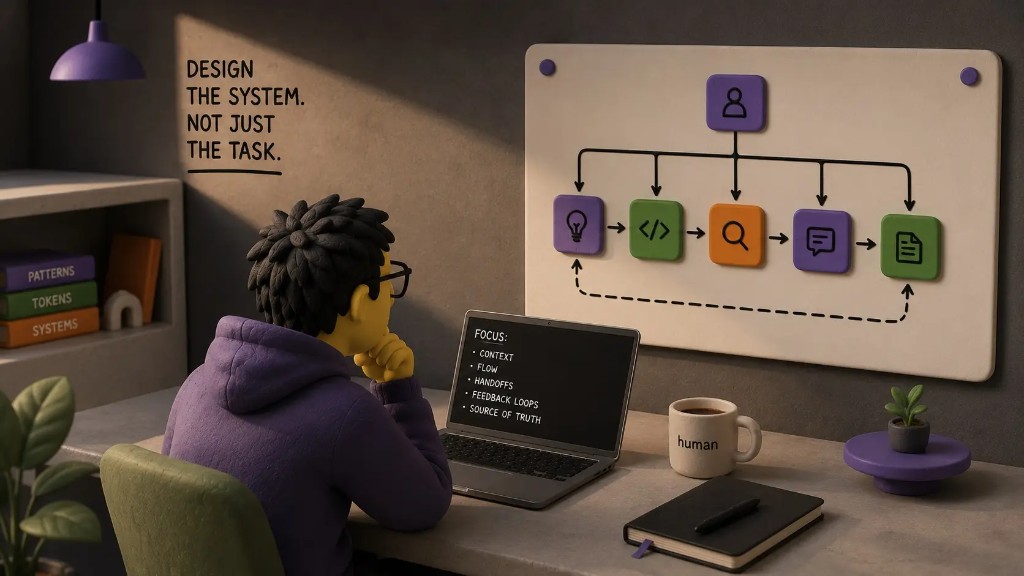
Results depend less on the model than on the process around it: context, roles, Skills, MCP, validation, and feedback. AI amplifies a specialist's capabilities, but it does not make product decisions for them.
Halo brings together fragmented team context from Tracker, Wiki, and meetings into a connected working memory. Rather than presenting a list of documents, it answers questions about decisions, changes, and ownership—with dates, links, and an explanation.
Field notes & guides
(3)Figma MCP gives the agent access to design structure, variables, and components, while Cursor helps connect them to the codebase. This speeds up the work, but quality still depends on the components, project rules, and verification of the result.
DESIGN.md helps communicate a design system’s visual rules and decisions to an AI agent, but it does not replace code, tokens, or documentation. A useful format is layered, points to sources of truth, and is validated by automated tests.
Designers do not need to become frontend developers. But understanding layout, component APIs, states, tokens, and accessibility helps them design systems that can be implemented, evaluate AI-generated results, and communicate with engineers without losing the original intent.